
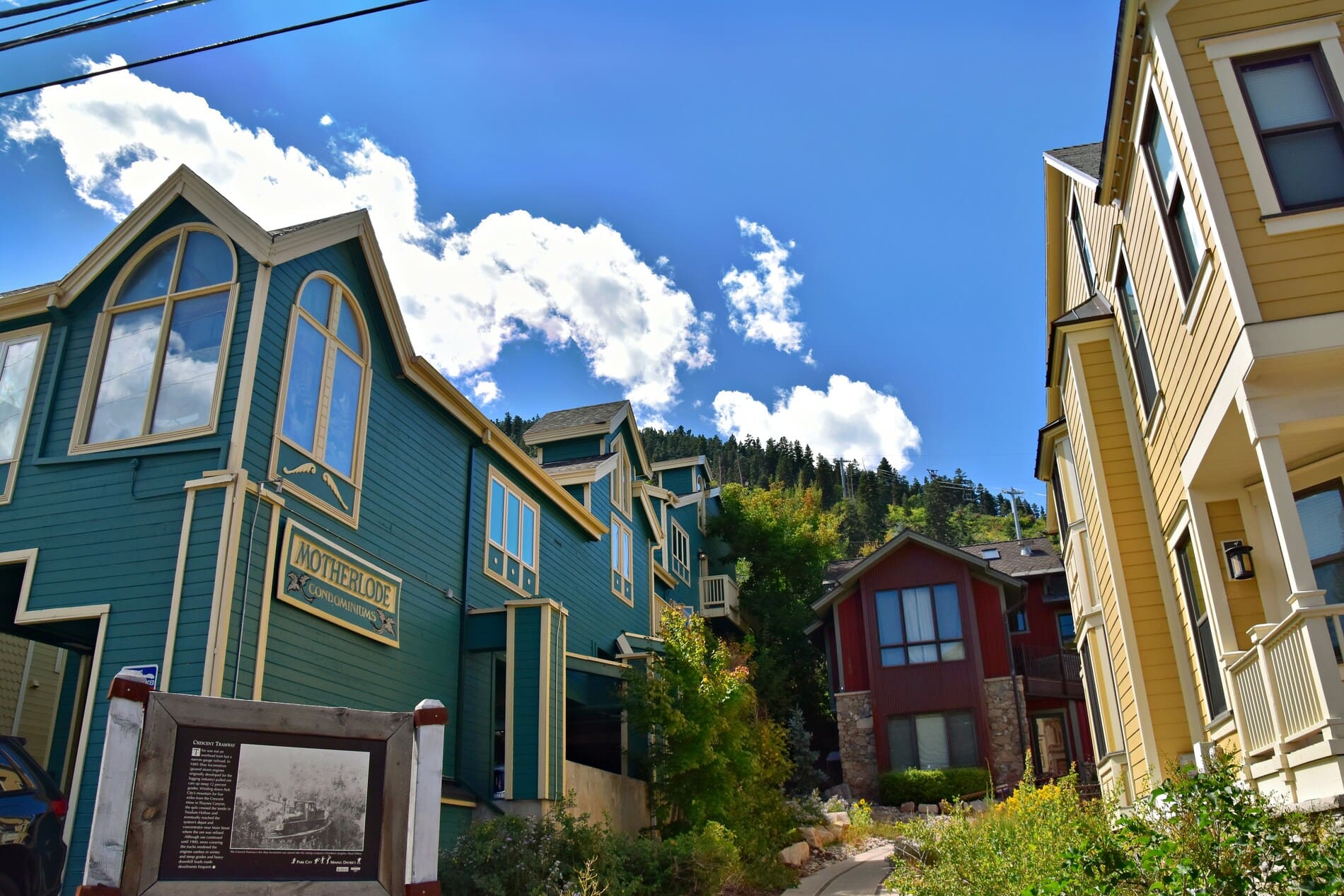
If you're looking at Old Town Park City real estate, you're probably drawn to the same things everyone loves; walking to world-class restaurants, ski-in access to Town Lift, and living in a legitimately historic mining town instead of a golf course development. But here's what I tell buyers after showing hundreds of Old Town properties: the price premium over other Park City neighborhoods is real, and understanding exactly what you're paying for (and what headaches you're signing up for) makes the difference between a great purchase and an expensive mistake.
The Old Town Price Premium: What $2M-$5M Gets You
Old Town Park City pricing follows a simple rule: proximity to Main Street drives everything. A Victorian cottage three blocks uphill might list for $1.9M, while a comparable home one block off Main Street commands $3.2M; and both need $150K in renovations.
Lower Old Town: $1.7M-$2.8M Range
Properties in this range typically sit 3-5 blocks uphill from Main Street or on the eastern edge near the Rail Trail. You're looking at:
-
1,200-1,800 square feet in original Victorian structures, often with additions that don't quite match the original architecture
-
2-3 bedrooms, 1-2 bathrooms, with layouts that reflect 1890s living (narrow hallways, small closets, bedrooms sized for iron beds)
-
0.08-0.12 acre lots, which sounds tiny until you realize most Old Town lots are 0.05-0.10 acres
-
One-car garages or carports, sometimes just uncovered parking pads
-
Significant deferred maintenance in most cases; these homes typically haven't had major systems updates in 15-20 years
The classic buyer for this range: second home owners who want Old Town walkability and Town Lift access but don't need modern luxury finishes or extra bedrooms. Many of these properties get purchased as "scrape and rebuild" opportunities by buyers who want an Old Town location but plan to tear down and start over within their first two years of ownership.
Mid Old Town: $2.8M-$4.5M Range
This is where you start seeing either renovated historic homes or newer construction that respects (or attempts to respect) Old Town's architectural character. Properties include:
-
2,000-3,200 square feet with thoughtful additions that actually work with the original structure
-
3-4 bedrooms, 3-4 bathrooms, with primary suites that meet modern expectations
-
0.10-0.15 acre lots, allowing for some outdoor space beyond a tiny patio
-
Updated mechanical systems (HVAC, electrical, plumbing) completed within the last 10 years
-
Modern kitchens and bathrooms while maintaining period-appropriate details in living spaces
-
Two-car garages, though "two-car" in Old Town often means compact spaces that barely fit modern SUVs
You're typically 1-3 blocks from Main Street at this price point. The walk to restaurants takes 3-7 minutes, and Town Lift sits 5-10 minutes away depending on your specific block. These properties attract primary residents who work remotely and second home owners who spend 4-6 months annually in Park City.
Upper Old Town: $4.5M-$9M Range
At the top of the market, you're paying for either prime Main Street location (literally on Main Street or half a block away) or completely rebuilt homes that look historic but function like new construction. Expect:
-
3,000-5,000 square feet of highly finished space with no compromises on modern systems
-
4-5 bedrooms, 4-5 bathrooms, with layouts designed for how people actually live today
-
Premium Main Street locations, where you walk out your door directly into the action
-
High-end finishes throughout; restored original details combined with luxury modern elements
-
Professional landscaping on those rare Old Town lots that offer 0.15+ acres
-
Heated driveways, snowmelt systems, and other winter maintenance solutions
These properties often generate $80K-$150K in annual rental income during Sundance Film Festival and peak ski season, which helps offset the $30K-$40K annual maintenance bills. Buyers at this level typically split time between Park City and a primary residence elsewhere, using the Old Town property 3-4 months per year and renting it aggressively during high-demand periods.
Victorian Home Maintenance: The $20K-$30K Annual Reality
Here's what nobody tells you about owning a historic Old Town property: maintenance costs run 2-3x higher than comparable square footage in a modern Park City neighborhood. Victorian-era construction requires specialized care, and ignoring maintenance creates exponentially more expensive problems.
Why Maintenance Costs Run So High
Original wood siding and trim requires repainting every 5-7 years at $15K-$25K for a typical Old Town home. The wood used in 1890s construction dries out in Park City's climate, leading to cracking and splitting that allows moisture intrusion. Once water gets behind siding, you're looking at $30K-$60K in structural repairs to replace rotted framing members.
Historic windows are beautiful but thermally inefficient and expensive to maintain. Single-pane glass with rope-and-pulley systems needs regular service, and full restoration runs $800-$1,500 per window. Most Old Town homes have 15-25 windows, putting total restoration costs at $12K-$37K. Many owners choose replica windows that match historic appearance but use modern double-pane glass and weatherstripping; that runs $1,200-$2,000 per window installed.
Foundation issues plague older Old Town homes. Original structures used stone foundations without proper moisture barriers, leading to ongoing water infiltration and settling. Foundation repair costs start at $20K for minor underpinning and reach $80K-$150K for comprehensive work that brings the structure up to modern standards. I've seen buyers walk away from otherwise perfect Old Town properties when the foundation inspection reveals $100K+ in necessary work.
Roofing on Victorian homes costs more than standard residential roofing because of complex angles, multiple peaks and valleys, and decorative elements that require specialized installation. Budget $18K-$35K for a complete roof replacement on a typical Old Town home, compared to $12K-$20K for a similar square footage in a newer neighborhood. The architectural complexity means more potential leak points, and leak repairs often cascade into interior water damage remediation.
Annual Maintenance Budget Breakdown
Plan on spending $20K-$30K annually on routine maintenance for a typical Old Town property in the $2M-$4M range. That breaks down roughly as:
-
$8K-$12K for landscaping and snow removal (Old Town properties often lack space for equipment storage, requiring contracted services)
-
$4K-$7K for HVAC maintenance, filter changes, and duct cleaning (older homes have retrofitted systems that need more frequent service)
-
$3K-$5K for exterior maintenance (painting touch-ups, trim repair, gutter cleaning)
-
$2K-$4K for plumbing repairs (old galvanized pipes corrode, require gradual replacement)
-
$3K-$5K for miscellaneous repairs (window repairs, door adjustments, hardware replacement)
This doesn't include major capital improvements like roof replacement ($18K-$35K every 20-25 years), foundation work (variable but often $20K-$100K when needed), or complete system replacements (HVAC $15K-$25K, electrical panel upgrade $8K-$15K, water heater $2K-$4K).
Properties in the $4.5M+ range that have been professionally renovated might see slightly lower annual maintenance costs ($15K-$20K) because major systems are newer, but you'll still pay premium prices for specialized contractors familiar with historic preservation standards.
Main Street Walkability Premium vs Parking Realities
The ability to walk to Main Street restaurants, galleries, and nightlife drives significant price premiums in Old Town; but parking challenges often catch buyers off guard. Understanding both sides of this equation helps you decide whether the walkability premium makes sense for your lifestyle.
The Walkability Premium by Block
One block from Main Street commands the highest premium. Properties here typically cost $500K-$1M more than comparable homes three blocks away. You're paying roughly $250K-$500K per block of distance from Main Street, with the steepest premium for that first block.
A 2,200 square foot renovated Victorian one block from Main Street might list at $3.8M, while a nearly identical property three blocks uphill (six-minute walk instead of two-minute walk) lists at $2.6M. That $1.2M difference buys you four fewer minutes of walking; works out to $300K per minute saved, or $5,000 per foot of elevation change.
Two to three blocks from Main Street offers better value for buyers who want walkability without paying maximum premium. You're still within a comfortable 5-8 minute walk to restaurants and shops, but you've saved $800K-$1.2M compared to Main Street-adjacent properties. Most buyers in this zone cite the quieter setting as a benefit; you get the walkability without the noise and tourist foot traffic directly outside your windows.
Four to five blocks from Main Street represents the outer edge of what most people consider "walkable" Old Town. The walk takes 10-15 minutes depending on winter conditions (icy sidewalks slow you down), and many residents drive or use the free transit system for evening restaurant visits. Pricing here reflects the reduced walkability; properties typically cost 30-40% less than Main Street-adjacent homes of similar size and condition.
Old Town Parking: One-Car Garages and Street Survival
Historic Old Town was built for horses and pedestrians, not modern vehicles. Parking presents daily frustrations that buyers need to understand before closing.
One-car garages are standard in Old Town, and "one-car" often means a narrow 10-foot-wide bay that barely accommodates a compact sedan. Many original carriage houses were converted to garages in the 1920s-1940s without expanding the footprint, leaving you with garage doors that are 7-8 feet wide instead of modern 9-foot minimum. Fitting a modern SUV requires careful maneuvering and often means folding in side mirrors.
Two-car garages exist in Old Town but are rare and command significant premiums. Properties with legitimate two-car garages (not just two narrow single-car bays) typically cost $200K-$400K more than comparable homes with single-car parking. Building a two-car garage in Old Town requires variance approval, available lot space (rare), and costs $80K-$150K for detached structures.
Street parking in Old Town operates on a complex system of permits, time limits, and seasonal restrictions. Winter street parking bans run from November through April on most blocks to allow snow removal equipment access. Violating winter parking restrictions results in your vehicle being towed to a lot several miles away, costing $200-$400 in towing and storage fees.
Residential parking permits cost $150-$300 annually per vehicle but don't guarantee you'll find a spot near your home. Many Old Town blocks see competition for street parking from restaurant patrons, gallery visitors, and tourists who haven't figured out the parking permit zones. Coming home after 7 PM on a weekend often means parking three blocks from your house and walking.
Making the Walkability Premium Work
The walkability premium makes financial sense if you'll actually use it regularly. Buyers who spend 3+ months annually in Park City and prefer walking to driving typically find the premium worthwhile; they save $2K-$4K annually on vehicle wear, gas, and parking by walking instead of driving to daily activities.
Second home owners who visit monthly or quarterly often regret paying $500K-$1M for walkability they rarely use. If you're visiting for long weekends and spending most of your time skiing rather than exploring Main Street, consider Old Town properties that are 3-5 blocks from Main Street at 30-40% lower prices.
Historic Preservation Rules: What You Can and Cannot Change
Park City's Historic Preservation Ordinance protects Old Town's character but creates restrictions that surprise many buyers. Understanding these rules before making an offer prevents expensive disappointment during your first year of ownership.
Exterior Changes Require Historic District Design Review
Any visible exterior change to your Old Town property requires approval from the Historic District Commission. This includes:
-
Paint color changes require approval, and the city maintains a list of historically appropriate colors for different architectural periods (Victorian, Mining Era, Early Modern)
-
Window replacement must use historically accurate sizes, proportions, and materials, or convincing modern replicas
-
Roofing material changes must maintain historic appearance (asphalt shingles designed to mimic wood shakes, metal roofing in historically appropriate profiles)
-
Additions and expansions face strict design guidelines requiring compatibility with existing structure in terms of scale, massing, materials, and architectural details
-
Garage construction or expansion requires demonstrating the design fits the historic character of the neighborhood
-
Fencing installation must use historically appropriate materials and designs (wood picket fences approved, modern metal privacy fences typically denied)
-
Landscape changes that affect historic character or streetscape require review
The review process typically takes 45-60 days for minor changes and 90-120 days for significant alterations. Many buyers plan summer renovations only to discover their application won't complete review before fall, pushing work to the following year and costing them a full season of use.
Interior Changes Offer More Flexibility
Once you're inside the exterior walls, historic preservation rules generally don't apply. You can:
-
Reconfigure interior layouts freely, removing walls, combining rooms, or creating open floor plans that work with modern living
-
Update kitchens and bathrooms with contemporary fixtures, appliances, and finishes without historic approval
-
Upgrade mechanical systems (HVAC, electrical, plumbing) to modern standards
-
Add insulation and improve energy efficiency within walls and attics
-
Install modern lighting, flooring, and finishes that suit your preferences
The catch: any interior work that affects the exterior (adding windows, relocating doors, installing new electrical meters or HVAC equipment visible from the street) falls back under historic review.
Working Successfully Within Historic Rules
Hire architects and contractors experienced with Park City historic review before starting any project. Firms that regularly navigate the Historic District Commission know what gets approved, what gets denied, and how to present proposals that meet guidelines while achieving your goals. Budget $8K-$15K for architectural drawings that meet historic review standards; cheaper alternatives typically get rejected and require expensive revisions.
Plan 6-9 months for any major exterior project from initial design through completed construction. Historic review adds 2-3 months to standard project timelines, and approved designs cannot be modified without additional review. Buyers who want to complete renovations quickly find Old Town's process frustrating.
Choose properties that already meet your needs rather than planning extensive renovations. Homes that have been recently updated within historic guidelines save you time, money, and bureaucratic headaches. Paying $200K-$400K more for a turnkey Old Town property often costs less than buying a fixer and navigating historic review for 12-18 months.
Sundance Film Festival Impact: $15K-$30K in 10 Days
Sundance Film Festival transforms Old Town into the epicenter of independent film each January, creating unique opportunities and challenges for property owners. Understanding the festival's impact helps you maximize rental income while managing expectations.
Rental Income During Sundance
Old Town properties within walking distance of festival venues command premium rental rates during Sundance's 10-day run. Typical festival week rentals generate:
-
$15K-$25K for 2-3 bedroom homes in good condition, 2-5 blocks from Main Street
-
$25K-$40K for renovated 3-4 bedroom homes with modern finishes, 1-3 blocks from Main Street
-
$40K-$80K for luxury 4-5 bedroom homes directly on or adjacent to Main Street
These rates represent 3-6 months of typical off-season monthly rental income compressed into 10 days. A property that rents for $6K/month in summer might command $30K for Sundance, with renters booking 12-18 months in advance.
Festival rentals require specific preparation. Properties must be immaculately maintained, professionally cleaned, and staged for high-net-worth renters who expect hotel-level service. Many owners hire property managers who specialize in festival rentals, paying 20-30% management fees in exchange for handling logistics, guest services, and any issues that arise during occupancy.
Location within Old Town dramatically affects festival rental value. Properties within a two-block walk of Egyptian Theatre or Main Street festival venues rent for 40-60% more than homes requiring a 10-minute walk. The difference between a $20K rental and a $35K rental often comes down to three blocks of distance from primary festival activity.
Festival Week Challenges for Owners
If you're in residence during Sundance, expect Old Town to be crowded, loud, and logistically challenging for 10 days. Street parking disappears completely as festival attendees fill every available space. Restaurants require reservations weeks in advance or involve 90-minute waits. Main Street sidewalks become impassable 6 PM-midnight as crowds move between venues.
Many Old Town residents who don't rent their properties during Sundance choose to travel elsewhere for the festival period. The rental income funds nice vacations, and avoiding the crowds eliminates daily frustration. Other residents embrace the festival energy, attending screenings and events within walking distance of home.
Property Value Impact of Festival Rental History
Properties with documented festival rental history (3+ years of successful Sundance rentals) sell for premiums of $100K-$300K compared to similar homes without rental history. Buyers purchasing Old Town real estate as investments want proof that properties can command premium festival rates, and consistent rental history provides that evidence.
Real estate listings often highlight "Sundance rental income: $28K in 2024, $25K in 2023, $30K in 2022" as a selling point. Properties that have never been rented during Sundance face buyer skepticism about whether they can actually achieve theoretical rental rates.
Old Town Lot Sizes: 0.1-0.15 Acres vs Modern Family Needs
Historic Old Town lots reflect 1880s urban planning that prioritized efficient land use in a mining town, not modern preferences for yards and outdoor space. Understanding lot size realities helps buyers assess whether Old Town fits their lifestyle.
Typical Old Town Lot Dimensions
Most Old Town residential lots measure 0.05-0.10 acres (2,200-4,400 square feet), with 25-foot frontages being extremely common. A typical lot might be 25 feet wide by 100-150 feet deep, creating narrow parcels that offer limited outdoor space once the house, garage, and required setbacks are accounted for.
Buildable space on these lots is further constrained by setback requirements (typically 10 feet front, 5-10 feet side, 10-15 feet rear), leaving a footprint of roughly 25 feet wide by 60-80 feet deep for structures. This explains why Old Town homes are often 1,500-2,500 square feet; the lots physically can't accommodate larger footprints without going vertical.
Outdoor space on a 0.08-acre Old Town lot typically consists of a small front porch (6-10 feet deep), narrow side yards (3-5 feet wide), and a backyard measuring 15-25 feet deep by 25 feet wide. Total usable outdoor space might be 400-800 square feet, enough for a small patio, minimal landscaping, and not much else.
Larger Old Town lots (0.12-0.18 acres) exist but command $300K-$600K premiums over similar homes on standard lots. These rare parcels allow for meaningful outdoor space, gardens, and modern additions without sacrificing all yard area. When larger Old Town lots come to market, they typically sell within 30-45 days to buyers who want Old Town location with more space flexibility.
How Lot Size Affects Daily Living
Families with children often find Old Town lot sizes constraining. There's limited space for kids to play outdoors, and storing bikes, skis, sleds, and outdoor toys requires creative indoor solutions. Many Old Town families spend significant time at nearby City Park (3-block walk from most Old Town properties) to give kids outdoor play space.
Dog owners navigate similar challenges. Small dogs adapt well to Old Town lots, but larger breeds need regular walks to nearby Rail Trail or City Park since backyards don't provide adequate exercise space. Some Old Town properties have no fenced yard at all, making outdoor dog containment impossible without leash walking.
Outdoor entertainment space is limited on typical Old Town lots. If hosting 15-20 people for dinner matters to you, understand that outdoor dining requires a very small patio with intimate seating, not a sprawling deck with multiple conversation areas. Most Old Town entertaining happens indoors or involves walking to restaurants on Main Street.
Storage limitations from small lots create ongoing challenges. There's no room for separate storage sheds, so Christmas decorations, ski equipment, bikes, lawn equipment, and seasonal items compete for space in garages and basements. Many Old Town owners rent storage units at $150-$300/month to handle overflow, adding $1,800-$3,600 annually to ownership costs.
When Small Lots Work (and When They Don't)
Old Town lot sizes work well for:
-
Empty nesters and couples who prioritize walkability over outdoor space
-
Second home owners who spend limited time in Park City and don't need significant property maintenance
-
Urban lifestyle enthusiasts accustomed to city living where small private yards are normal
-
Buyers prioritizing location over space who accept trade-offs for Old Town living
Old Town lot sizes create challenges for:
-
Families with multiple young children who need outdoor play space at home
-
Large dog owners whose pets need room to run and explore
-
Outdoor entertainers who want to host large gatherings in private yard spaces
-
Car collectors or recreation vehicle owners who need significant parking and storage
Town Lift Access: Ski-In Reality Check
Old Town's proximity to Town Lift; the base area lift for Park City Mountain Resort; features prominently in marketing materials, but actual ski access varies dramatically by location within Old Town.
True Ski-In/Ski-Out Properties
Genuine ski-in/ski-out access in Old Town exists only for properties within a one-block radius of Town Lift base. These homes allow you to ski from your door to the lift in 2-5 minutes, and ski home at day's end without removing skis. Properties with true ski-in/ski-out access command $500K-$1M premiums over comparable Old Town homes that are three blocks away.
These ultra-convenient properties number fewer than 50 residences in all of Old Town. When they come to market, they typically sell in 20-40 days to buyers specifically seeking true ski-in/ski-out access. Competition for this limited inventory drives prices to $500-$800 per square foot, compared to $350-$550 per square foot for other Old Town properties.
"Walk-to-Ski" Properties (Majority of Old Town)
Most Old Town real estate falls into the "walk-to-ski" category, meaning you'll walk 5-15 minutes to reach Town Lift depending on your specific location. This walk involves:
-
Navigating icy sidewalks in full ski gear (boots, carrying skis or board, wearing helmet and goggles)
-
Walking uphill or downhill depending on your location relative to Town Lift elevation
-
Managing snowy or slushy conditions that make the walk slower and less pleasant than summer strolls
-
Carrying or wearing all equipment since there's no ski valet service between your home and the lift
Properties 3-5 blocks from Town Lift describe themselves as having "easy ski access" or being "steps from Town Lift," but the reality is a 10-15 minute walk in ski boots carrying equipment. For many owners, this means driving to Town Lift parking ($25/day or $599 season pass) or using free Park City transit buses that run every 15-20 minutes during ski season.
Making Old Town Ski Access Work
Ski locker rentals at Town Lift ($300-$600 per season) allow you to store equipment at the base area, solving the "carrying skis through Old Town" problem. You walk to Town Lift in snow boots carrying nothing, change into ski boots at your locker, and ski. Many 3-5 block Old Town owners consider this $600 annual expense essential for actually using their ski access.
Electric bikes or scooters help some owners bridge the walk-to-ski gap, cutting the 10-minute walk to 3-4 minutes. This works well in early season and spring when bike paths are clear, but mid-winter snow and ice make cycling impractical. Budget $1,500-$3,000 for a quality electric bike that handles winter conditions.
Free transit (Bus Route 1 and Historic Main Street Trolley) runs continuously during ski season, with stops throughout Old Town. Many residents find riding the bus more practical than walking in ski gear, particularly for families with children who move slowly in ski boots. The trade-off: buses fill up on powder days, sometimes requiring you to wait for the next bus (15-20 minute delay).
Comparing Old Town Ski Access to Other Park City Neighborhoods
Old Town's ski access excels compared to neighborhoods like Park Meadows (10-15 minute drive to slopes) or Pinebrook (15-20 minute drive), but falls short of true ski-in/ski-out Deer Valley or Canyons Village properties where you walk out your door directly onto slopes.
A realistic comparison:
-
True ski-in/ski-out Deer Valley condo: 30 seconds from door to chairlift, $1.5M-$4M with $1,000-$2,000/month HOA
-
Town Lift adjacent Old Town home (1 block): 3-5 minute walk to lift, $3M-$5M with $100-$300/month minimal expenses
-
Typical Old Town home (3-4 blocks): 10-15 minute walk or 5-minute bus ride to lift, $2M-$3.5M with $100-$300/month expenses
-
Park Meadows or Prospector: 10-15 minute drive to resort parking, $1.5M-$3M with $200-$500/year HOA
Old Town delivers better ski access than most Park City neighborhoods at comparable price points, but buyers expecting true ski-in/ski-out convenience should target the small subset of properties within one block of Town Lift base.
Is Old Town Park City Worth the Premium?
Whether Old Town makes sense depends entirely on how you'll actually use the property and which specific trade-offs matter to you.
Old Town Makes Sense If You:
-
Value walkable lifestyle above all else and will regularly walk to restaurants, shops, galleries, and events
-
Appreciate historic architecture and enjoy living in a restored Victorian-era home with period details
-
Plan to generate rental income during Sundance Film Festival and peak ski season to offset ownership costs
-
Use the property extensively (3+ months annually) so you capture maximum value from the walkability premium
-
Don't need large yards or significant outdoor space and prefer urban-style living with small private outdoor areas
-
Accept higher maintenance costs as part of preserving a historic property in a mountain climate
-
Want ski access that's genuinely walkable (5-15 minutes maximum) rather than requiring a drive to resort parking
Old Town Creates Challenges If You:
-
Need low-maintenance ownership since Victorian homes require ongoing attention and higher annual upkeep costs
-
Want modern construction with efficient systems, insulation, and layouts designed for contemporary living
-
Require parking for multiple vehicles or want two-car garage space that actually fits modern SUVs
-
Have large families or dogs that need significant outdoor play space at home
-
Visit infrequently (monthly or quarterly) and won't capture value from walkability you're paying $500K-$1M premium for
-
Expect true ski-in/ski-out access but are looking at properties 3+ blocks from Town Lift
-
Want to avoid historic preservation bureaucracy and prefer freedom to modify exterior without government review
The typical Old Town buyer is an empty nester or couple purchasing a second home who spends 2-4 months annually in Park City, walks to dinner 3-4 nights per week, values the historic character and Main Street energy, and accepts the premium pricing as payment for a unique lifestyle that doesn't exist anywhere else in Park City.
If that describes you, Old Town offers something genuinely special that justifies the premium. If you're primarily focused on ski access, low maintenance, or maximizing square footage per dollar, other Park City neighborhoods deliver better value for your specific priorities.
For a comprehensive breakdown of what different price points deliver across Park City, see Park City Price Tiers: What $1M, $3M, $5M, and $10M Actually Buy You. For insights on ongoing ownership costs, see The Real Cost of Owning a Home in Park City.
Search Old Town, Park City Utah Real Estate, Over $1,000,000


Considering Old Town Park City real estate? Understanding the true costs, benefits, and lifestyle implications helps you make confident decisions about whether this historic neighborhood fits your needs. As a Realtor who works extensively in Old Town, I help buyers navigate everything from Victorian maintenance realities to Sundance rental strategies to finding properties that match your actual use patterns rather than romanticized ideas about mountain living.
The information provided here reflects general market conditions and typical property characteristics in Old Town Park City. Real estate markets change, individual properties vary significantly, and personal circumstances differ. This content is for informational purposes only and should not be considered legal, financial, or investment advice. Specific questions about Old Town properties, regulations, or suitability for your situation should be directed to qualified professionals including real estate agents, attorneys, accountants, and financial advisors who can evaluate your unique circumstances.
Frequently Asked Questions About Old Town Park City Real Estate
What's the average price per square foot in Old Town Park City?
Old Town Park City averages $450-$650 per square foot depending on proximity to Main Street and renovation quality, compared to $350-$500 per square foot in neighborhoods like Park Meadows or Prospector. Properties within one block of Main Street or Town Lift command $600-$800 per square foot, while homes 4-5 blocks away typically range $400-$550 per square foot. The premium reflects walkability, historic character, and location rather than construction quality or square footage.
Can you build a new home in Old Town Park City?
Yes, you can build new construction in Old Town, but all exterior design must comply with Historic District design guidelines that require compatibility with surrounding Victorian-era architecture. This means new homes must use historically appropriate materials, proportions, roof pitches, and architectural details even though interior layouts and systems can be completely modern. The design review process adds 3-6 months to construction timelines and requires architects experienced with Park City historic preservation standards. Many buyers find it easier to purchase an existing renovated Old Town home rather than navigating new construction approval.
How much should I budget annually for Old Town Victorian home maintenance?
Plan on $20K-$30K annually for routine maintenance on a typical $2M-$4M Old Town Victorian home, which is 2-3x higher than similar square footage in newer Park City neighborhoods. This covers landscaping, snow removal, HVAC service, exterior maintenance, plumbing repairs, and miscellaneous fixes. Additional capital expenses occur periodically: roof replacement ($18K-$35K every 20-25 years), foundation work ($20K-$100K when needed), complete HVAC replacement ($15K-$25K), and exterior painting ($15K-$25K every 5-7 years). Properties in the $4.5M+ range with recent renovations might see slightly lower annual costs ($15K-$20K), but specialized contractors and historic preservation requirements keep expenses elevated compared to modern construction.
Is parking really that difficult in Old Town Park City?
Yes, parking presents daily challenges in Old Town. Most historic homes have one-car garages (often narrow 10-foot bays that barely fit compact cars), and street parking operates on complex permit systems with winter bans November-April on most blocks. Even with residential parking permits ($150-$300 annually), competition for street spots from restaurant patrons and visitors means you may park 2-3 blocks from your home on busy evenings. Many Old Town residents consider the parking frustration an acceptable trade-off for walkability, but buyers coming from suburban areas with multi-car garages and driveways find the adjustment difficult.
What rental income can Old Town properties generate during Sundance?
Old Town properties generate $15K-$40K in rental income during the 10-day Sundance Film Festival depending on size, condition, and proximity to Main Street. A typical 2-3 bedroom renovated home 2-4 blocks from Main Street commands $18K-$28K for the festival period, while luxury 4-5 bedroom properties directly on Main Street can reach $50K-$80K. This represents 3-6 months of typical off-season rental income compressed into 10 days. Properties with documented multi-year festival rental history sell for $100K-$300K premiums over comparable homes without rental track records.
How close do you need to be to Town Lift for true ski-in/ski-out access?
True ski-in/ski-out access in Old Town exists only within a one-block radius (roughly 300-400 feet) of Town Lift base, where you can ski from your door to the lift in 2-5 minutes without removing skis. These properties number fewer than 50 residences and command $500K-$1M premiums over homes three blocks away. Most Old Town real estate falls into the "walk-to-ski" category (5-15 minute walk in ski gear), which many owners find less convenient than expected. Ski locker rentals at Town Lift ($300-$600/season) or using free transit buses become practical solutions for homes beyond the immediate Town Lift vicinity.
What restrictions come with Historic District designation in Old Town?
Any visible exterior change requires Historic District Commission approval, including paint color changes, window replacement, roofing material changes, additions, garage construction, fencing, and landscaping that affects streetscape character. The review process takes 45-60 days for minor changes and 90-120 days for significant work. Interior changes generally don't require historic approval unless they affect the exterior (new windows, relocated doors, visible mechanical equipment). These rules preserve Old Town's character but add time, cost, and complexity to renovations. Buyers planning major changes should budget 6-9 months from design through completion and hire contractors experienced with Park City historic review.
Are Old Town lot sizes too small for families with children?
Many families find typical Old Town lots (0.05-0.10 acres with 400-800 square feet of usable outdoor space) constraining for children's outdoor play. There's limited room for swing sets, trampolines, or running around, and storing bikes, skis, and outdoor toys requires creative indoor solutions. Most Old Town families compensate by using nearby City Park (3-block walk from most properties) for outdoor play space. Larger Old Town lots (0.12-0.18 acres) exist but command $300K-$600K premiums and sell quickly when available. Families prioritizing outdoor space often choose neighborhoods like Park Meadows or Pinebrook with 0.25-0.50 acre lots instead.
What's the difference between Lower, Mid, and Upper Old Town pricing?
Lower Old Town ($1.7M-$2.8M) sits 3-5 blocks from Main Street with 1,200-1,800 square feet, often needs significant updates, and typically serves as second homes or teardown opportunities. Mid Old Town ($2.8M-$4.5M) offers renovated homes with 2,000-3,200 square feet, 1-3 blocks from Main Street, with updated systems and modern finishes while maintaining period details. Upper Old Town ($4.5M-$9M) provides prime Main Street locations or completely rebuilt homes with 3,000-5,000 square feet, luxury finishes, and potential for $80K-$150K annual rental income. Each $500K-$1M step up primarily buys proximity to Main Street (roughly $250K-$500K per block) rather than significantly more square footage or dramatically better construction quality.
Should I buy in Old Town if I'll only visit monthly or quarterly?
Probably not. The Old Town premium (typically $500K-$1M over comparable properties in neighborhoods like Prospector or Thaynes Canyon) pays for walkability to Main Street restaurants, shops, and events. If you're visiting for long weekends and spending most time skiing rather than exploring Main Street, you won't capture meaningful value from the walkability you're paying premium prices for. Monthly or quarterly visitors often find better value in neighborhoods 3-5 blocks from Old Town proper ((like Thaynes Canyon at 20-40% lower prices) or ski-adjacent locations like Lower Canyons Village where you maximize time on slopes instead of Main Street.
Posted by TJ Walsh on
Enjoy this blog post? Click here to subscribe for updates
Leave A Comment